Decarbonising the Queenstown Lakes visitor economy by 2030
Queenstown Lakes is taking action to support the goal of a carbon-zero visitor economy by 2030 - a bold but essential step to minimise environmental impact, build resilience, and strengthen the region’s economic future. The district’s roadmap - A Pathway to Decarbonise, Queenstown Lakes’ Visitor Economy Decarbonisation Plan - outlines a practical pathway and key workstreams that turn ambition into progress, setting a benchmark for a decarbonised visitor economy in New Zealand and further afield.
Why Decarbonisation Matters
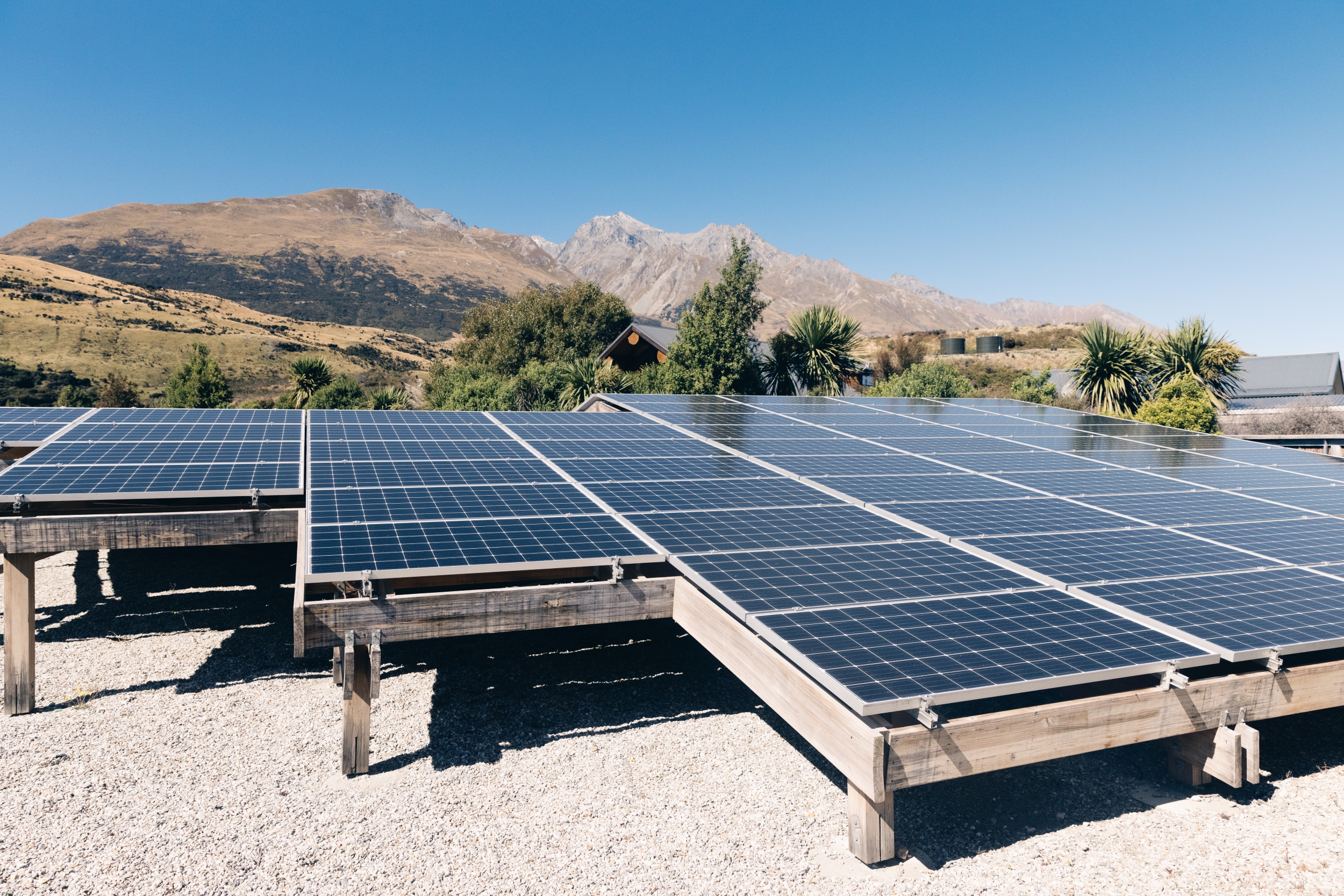
Climate change is one of the biggest challenges facing Queenstown Lakes and the visitor industry’s reliance on transport and energy means the sector must play a significant role in the solution. The plan focuses on where the district has direct influence - such as increased renewable energy production (i.e. solar panels), low-emissions transport, waste reduction, supply chain transformation, and resilient local food systems.
While aviation remains the largest and hardest-to-control source of emissions, the plan keeps attention on actions that can be taken now. Beyond environmental benefits, decarbonisation also builds economic and community resilience. Compelling evidence shows that a proactive transition could deliver more than an estimated NZ$670 million in net benefit by 2050 to the district, through lower costs, clean-tech investment, and stronger local supply chains (1). These steps protect the landscapes and livelihoods that define the region, proving that what supports the environmental also strengthens the economy and community wellbeing.
A Pathway to Decarbonise
A Pathway to Decarbonise, Queenstown Lakes’ Visitor Economy Decarbonisation Plan is a guide for how the district is aiming to achieve a carbon-zero visitor economy. Developed collaboratively by Queenstown Lakes District Council, Destination Queenstown, and Lake Wānaka Tourism and input from experts, and community partners - the document turns climate ambition into coordinated action.
It outlines where emissions come from and what can be done to reduce them. Each of the ten interconnected workstreams define what success looks like by 2030, detailing the actions that businesses, council, and organisations can take to play their part. Together, they form the practical backbone of the district’s carbon-zero goal, focusing on areas such as increased renewable energy production (i.e. solar panels), low-emissions transport, wasten reduction, supply chain transformation, and resilient local food systems.
Early initiatives include the Electrify Queenstown event, carbon measurement workshops, the Queenstown Electrification Accelerator programme, and collaborations linking tourism operators with biodiversity groups. They are already helping to put the roadmap into motion.
The plan:
- Translates climate ambition into action.
- Enables businessses and organisation to see thier roles and contribution.
- Prioritises real emissions reductions before offsets.
- Builds accountability, momentum, and shared ownership.
- Strengthens the local economy through resilience and lower long-term costs.
The Pathway: Five Levers for System-Wide Change
The plan begins by outlining why decarbonisation matters and introduces five levers that shape the district’s transition. These levers define the combined set of actions that reduce emissions from travel to the region, movement within it, and the wider operations of the visitor system.
- Decarbonise in-destination activities - switching to renewable energy, electrifying buildings and vehicles, reducing waste, strengthening food systems, and enabling low-emissions tourism experiences.
- Market mix - adjusting promotion and experience design toward visitor markets with a lower emissions profile and higher alignment with regenerative tourism values.
- Length of stay - supporting longer stays that increase visitor contribution while reducing emissions per trip.
- Decarbonise aviation - advocating for national and international progress on sustainable aviation fuels, electric and hydrogen propulsion, and supportive regulatory frameworks.
- Remove residual emissions - using high-integrity, science-aligned carbon removals for the hardest-to-abate emissions, emphasising local ecological restoration where possible.
Together, these levers capture the full picture of how emissions can be reduced across the entire visitor system - from the moment visitors begin their journey, to the choices they make during their stay, to the way the tourism economy operates.
The Workstreams: Structure for District-Wide Action
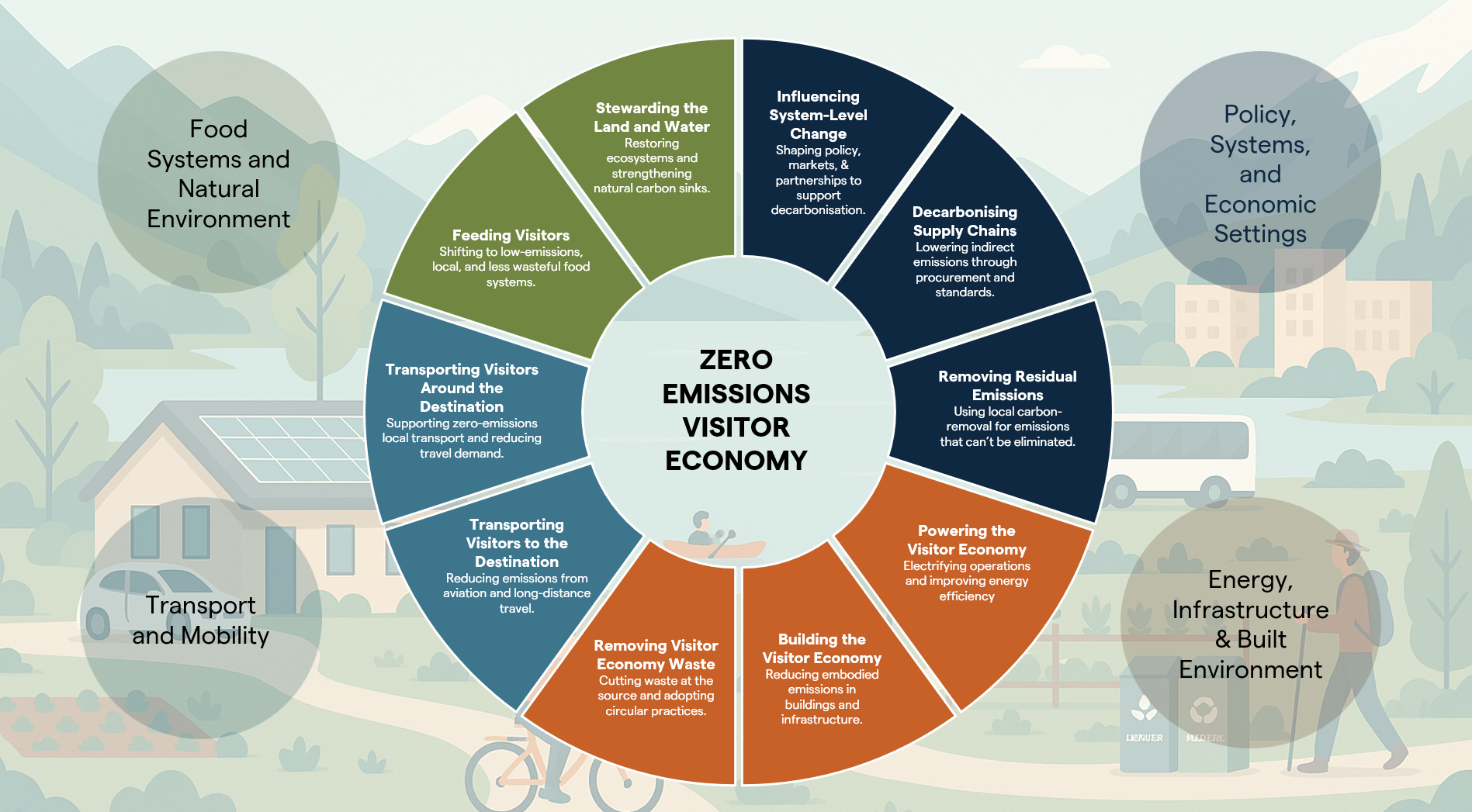
At the heart of the roadmap are ten interconnected workstreams. Each represents a major area of influence over visitor economy emissions. Although each is distinct, together they deliver the district-wide change required to reach carbon zero by 2030. An infographic (below) accompanies the plan to visually link these workstreams and show how each contributes to the overarching goal.
These workstreams cover energy transition, transport to and within the district, food systems, supply chains, built environment, waste, land and water stewardship, and the removal of residual emissions. They also include actions designed to influence system-level change, helping align planning, governance, and investment with long-term decarbonisation outcomes.
Implementation and Coordination
The roadmap includes a detailed framework for how the workstreams will be delivered. It identifies Year 1 priorities, pilot programmes, and the specific roles of Destination Queenstown, Lake Wānaka Tourism, Queenstown Lakes District Council and private-sector partners. Coordination ensures that actions are aligned, benefits are shared, and progress is transparent.
A Living Framework for Change
The roadmap is designed as a living document - one that evolves with new technologies, partnerships, and insights. It encourages collaboration between tourism operators, councils, iwi, and residents, emphasising that collective action compounds impact. By prioritising emissions reductions first, not offsets, the district is demonstrating genuine leadership and accountability in the global tourism sector.
Why This Matters for Regenerative Tourism
The Decarbonisation Plan is a cornerstone of Queenstown Lakes’ regenerative tourism vision. Carbon zero by 2030 is the keystone project of Travel to a Thriving Future, and the plan provides the structure needed to make this ambition real. By focussing on measurable emissions reductions and coordinated district-wide action, it advances the Destination Management Plan’s core goals: restoring the environment, strengthening community wellbeing, and building a more resilient, future-focused visitor economy.
The Plan positions the district as a national leader in climate transition while ensuring tourism continues to enhance the landscapes, communities, and cultural values that define the region. Progress depends on collective effort. Businesses can start measuring emissions, electrifying fleets, reducing waste, and supporting local suppliers. Residents and visitors can make low-emissions choices and back initiatives that protect local ecosystems.
If you are interested in the detail please read A Pathway to Decarbonise, Queenstown Lakes’ Visitor Economy Decarbonisation Plan.
If you have any questions, feedback, or comments, please reach out through the contact form.
(1) A Pathway to Decarbonise Queenstown, Lakes’ Visitor Economy Decarbonisation Plan, based on Deloitte. Aotearoa New Zealand’s Turning Point (2023) (Estimated as a proportion of New Zealand’s GDP).


