DMP Development
The Destination Management Guidelines are shared with industry stakeholders providing practical tools for supporting and developing the tourism economy in alignment with the New Zealand-Aotearoa Government Tourism Strategy.

A partnership is established between Queenstown Lakes District Council, Lake Wānaka Tourism and Destination Queenstown to develop a Destination Management Plan for the region as an output of the Whaiora | Grow Well Partnership (Spatial Plan).


Expert consultants in destination management are engaged at different stages to support the development of the regions Destination Management Plan, including Think Place, Proxima and Destination Think.

Four full-day design forums were held with a diverse range of stakeholders, including community members, students, industry and municipality representatives. This was followed up with four local workshop sessions with the broader community in Glenorchy, Queenstown, Wānaka and Arrowtown. The July sessions improved community awareness of the regenerative potential of the visitor economy and began to capture the opportunities associated with regenerative tourism. The August sessions crystallised the purpose and vision for the Queenstown Lakes visitor economy, and examined the district’s story of place.
A half-day workshop was held with visitor economy businesses from across the district. Here, the vision and purpose of the visitor economy were tested and refined. The forum revealed operators’ ambitions, as well as barriers and levers for a regenerative future.
Over 60 individual one-hour interviews were conducted with stakeholders from the district and from a variety of national bodies. This improved awareness of the potential for regenerative tourism as well as further identify barriers and opportunities.

90 people attended this interactive three-hour session that included a panel discussion, keynote address and community workshop as part of WAO 2021. The goal was to test and critique themes of the draft plan. A visual communications board of the plan was made to move around the district and share the vision of the plan and the opportunity to give feedback.
A draft version of the plan was released for public feedback. All input was analysed and considered as revisions to the plan were made. In November the new draft of the plan was presented in a series of public stakeholder meetings. The keystone project for the Queenstown Lakes visitor economy to reach carbon zero by 2030 was socialised because of community feedback.
Queenstown Lakes shares its ambitious goal to become a carbon-zero visitor economy by 2030. This initiative followed extensive engagement with the community and stakeholders about the DMP and its ambitions.
Travel to a Thriving Future, the Queenstown Lakes Regenerative Tourism Plan was presented to Queenstown Lakes District Councillors. The Plan is unanimously endorsed and receives widespread support from Councillors, community and the tourism industry.
DMP Implementation

Destination Queenstown and Lake Wānaka Tourism established two community funding platforms, Love Queenstown and Love Wānaka. The platforms focus on raising funds to support localised climate, conservation, and biodiversity initiatives, accelerating the local industries shift to a regenerative future and enabling visitors to positively impact Queenstown and Wānaka through their activities and experiences.
The Queenstown Lakes' Carbon Zero Discussion Paper presents research and analysis that will influence the creation of a roadmap to guide decarbonisation across the region. The paper invites feedback on decarbonisation initiatives, methodology, findings and further solutions.

Destination Queenstown and Lake Wānaka Tourism integrate projects from the DMP into their respective Business Plans for FY23/24, acknowledging the vital role that RTOs play in both destination management and marketing.
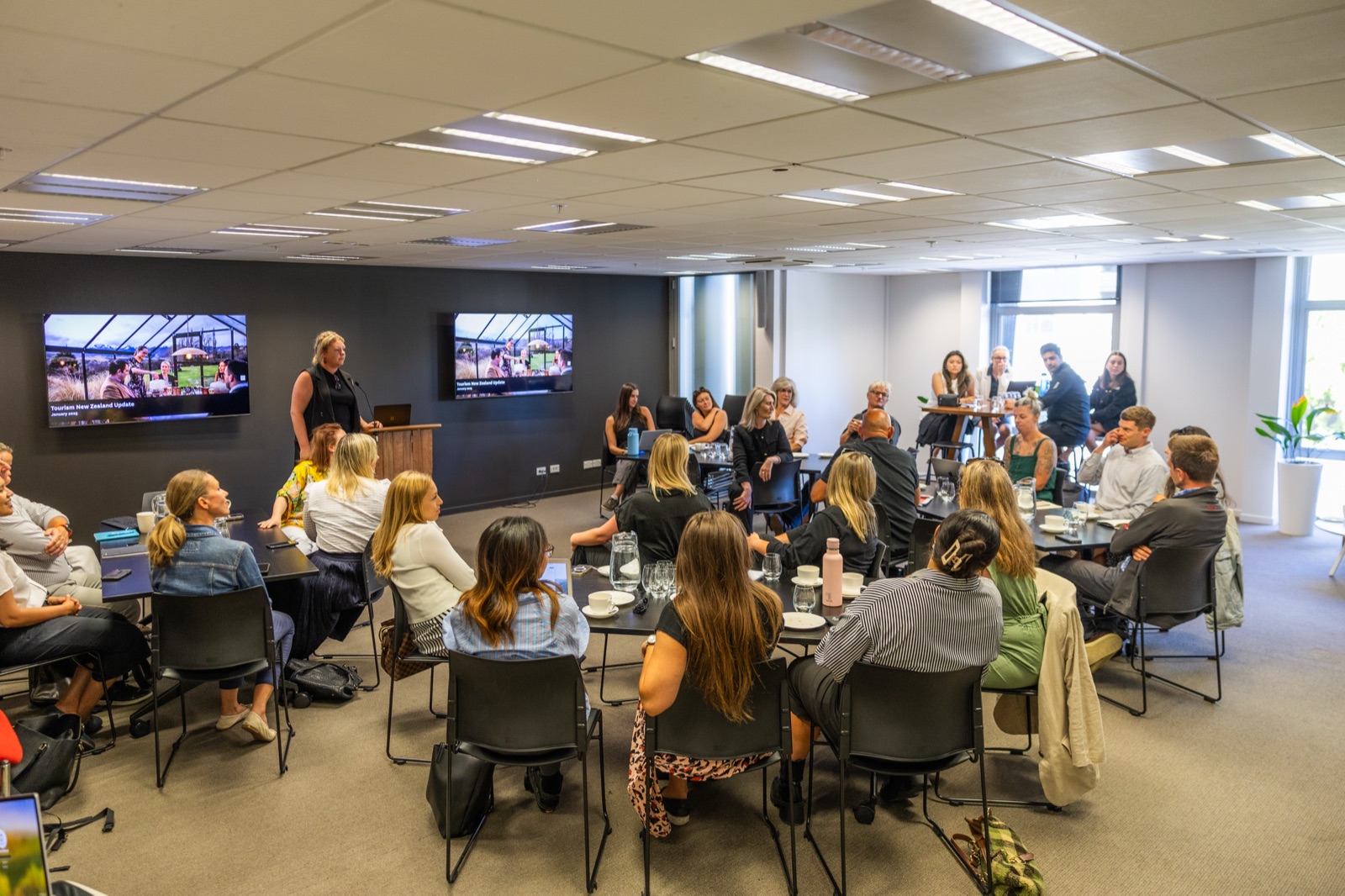
Since its launch, the RTO Member Capability programme has been supporting tourism businesses in building capability in business fundamentals, marketing, customer service, artificial intelligence, environmental measurement and responsibility, diversity, equity and inclusion, and more. The programme has grown significantly, now delivering weekly workshops with subject matter experts, alongside a growing library of practical resources housed on the RTO Member Hub.
Mahi Queenstown Lakes (MahiQL) is a collaboration with QLDC, led by the Queenstown Business Chamber of Commerce with a vision to make the district the best place in the world to live, work, play and do business. MahiQL focuses on long-term solutions that go beyond pay, strengthening community connection, creating clearer career pathways, and improving the overall quality of the work experience.

Launched in 2024, the annual Electrify Queenstown event is a multi-award-winning event that combines hands-on experiences with expert insights. The three-day event is fast becoming a flagship in the Queenstown Lakes calendar and a genuine national gathering point for New Zealand's electrification sector. The event showcases and promotes the transition to clean energy and electric solutions in a way that is accessible, practical, and relevant for everyone, from everyday homeowners to industry operators.
A groundbreaking tourism project was launched to develop an optimal visitation model for Queenstown Lakes region. Led by Griffith University, the research team included Professors Susanne Becken, James Higham, and Oz Sahin, with support from Shane Vuletich of FreshInfo. The model has tested growth scenarios to explore not just how many visitors the district can host, but how many it should, and under what conditions. The original research project is now complete but will continue to support informed, evidence-based decision making for a regenerative, system-led approach to growth.
DQ and LWT fully subsidised the Cogo Vistr Carbon Manager tool for local tourism operators, providing a free, low-resource way for businesses to measure their carbon footprint and begin identifying opportunities to reduce emissions. With an onboarding process taking approximately 15 minutes, the tool generated a spend-based carbon footprint estimate, helping businesses understand, track and reduce their emissions while removing some of the barriers to carbon measurement. Importantly, Cogo data could also be securely aggregated by Vistr to build a district-wide carbon footprint for the tourism industry. This would have provided a clearer picture of the region's emissions profile and helped identify shared challenges, including energy use, supply chain emissions, and waste. The intent was to use the insights to inform targeted support for businesses and enable DQ and LWT to advocate for solutions at a systems level. Before this work could be completed, the Cogo Carbon Manager tool was decommissioned in April 2026.
The pilot of the Digital Catalyst programme aimed to help businesses understand their tech stack, identify areas for improvement, implement changes that support resilience and productivity, and build a digitally confident visitor economy.
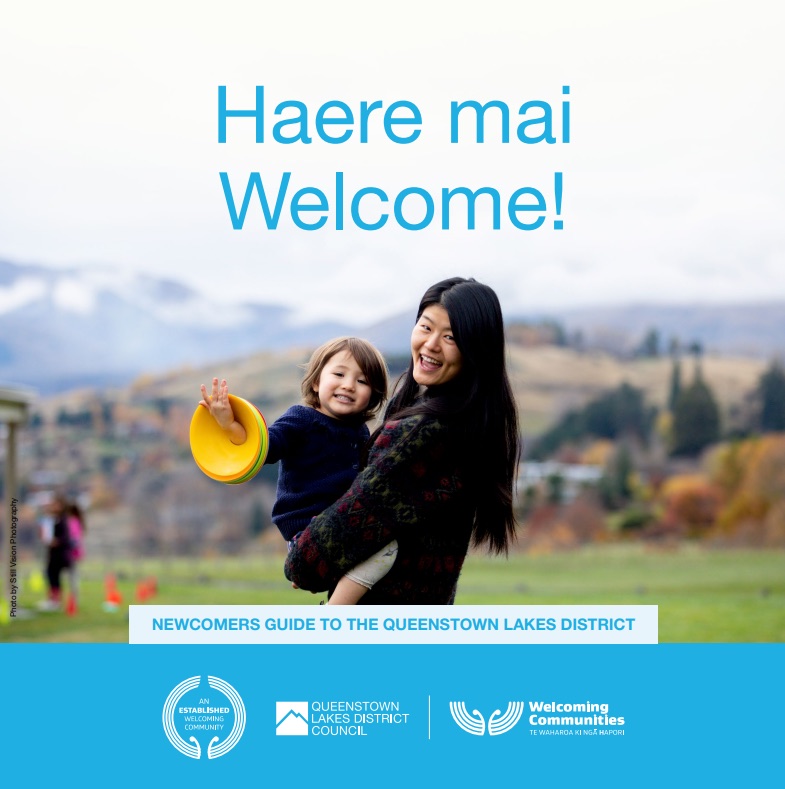
In a district shaped by migration and seasonal movement, QLDC's Welcoming Communities programme published a Newcomers Guide, designed as a trusted, practical resource to make it easier to live, work, study and participate locally. This guide provides information on how to find a place to live, work, access health care, connect with your community, learn English, manage money and finances, what to do in case of an emergency, and much more. This workstream supports strong social connections and reliable access to services, which are essential to community resilience, workforce stability, and quality of life.
To ensure the destination's climate action and carbon reduction goals remain aligned with global best practice, DQ and LWT signed the Glasgow Declaration on Climate Action in Tourism. As signatories, we have developed a Climate Action Plan for both Queenstown and Wānaka, with progress reported on annually. This provides a framework for ongoing accountability and transparency, while strengthening DQ and LWT's leadership in destination climate action. It also enables Queenstown and Wānaka to benchmark their progress alongside other tourism destinations internationally and ensures the region's climate action is visible and recognised on the global stage.
A key workstream out of the DMP's Keystone Project: Carbon Zero by 2030, the Queenstown Electrification Accelerator (QEA) was established to accelerate the adoption of clean energy in the district. The QEA provides independent, free energy education and advice, helping businesses and households make informed choices that reduce both costs and emissions, and build resilience.

The CARE Project (Coordinated Air Repatriation and Evacuation) is a collaborative initiative with QLDC, Queenstown Airport Corporation, and Emergency Management Otago. The project focuses on how aviation could support the safe and efficient evacuation of tens of thousands of visitors if road access to the district was cut off, by developing a coordinated, flexible planning framework.
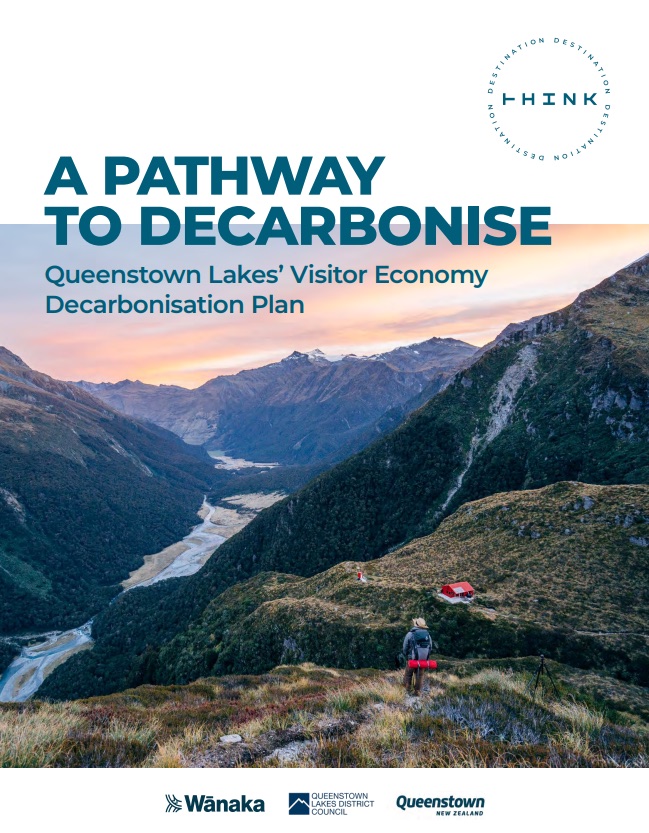
A Pathway to Decarbonise, Queenstown Lakes' Visitor Economy Decarbonisation Plan, is a guide for how the district is aiming to achieve a carbon-zero visitor economy. Developed collaboratively by Destination Think, Queenstown Lakes District Council, Destination Queenstown, Lake Wānaka Tourism, experts, and community partners, the document turns climate ambition into coordinated action. It outlines where emissions come from and what can be done to reduce them via ten interconnected workstreams.
The Queenstown Place Brand project progressed through desk research, on-the-ground research, stakeholder and Kāi Tahu interviews, and community and industry workshops. Findings were synthesised into a Place DNA® Analysis and Report, defining Queenstown's unique identity, key place attributes and strategic considerations to guide future destination and brand alignment.
In an effort to strengthen visibility, alignment, and collaboration between organisations contributing to the DMP, a Stakeholder Alignment Hui was established. Held biannually, the Hui provides stronger communications between different delivery partners, including community groups, QLDC, RTOs, and organisations that have projects that support or enable delivery.
QLDC's Economic Futures team and Technology Queenstown scaled their original Host Tech cluster work into welcoming Asia Pacific WiT for the first time. The conference positions the district as a serious travel-tech hub, spotlighting the tourism base as an opportunity for innovation, investors, and operators.
A progress report on DMP activity was published in September 2026. The report covers activity delivered by partners in the 2025-2026 financial year, across all 23 projects under the DMP's three strategic pillars.


